
A product architecture and system design case focused on transforming workflow automation from an engineering-owned layer into a governed self-service product.
Product Definition · System Modeling · Workflow Architecture · Requirements Engineering · Governance · Product Strategy
Workflow automation already existed, but it was not a product. It was an engineering-controlled configuration layer. Every change required technical involvement, which created delays, increased cost, and blocked iteration. At the same time, the platform had a strong strategic opportunity with automation triggered by real-time events, including voice-based signals.
The core question I addressed was how workflow automation could become a controllable product system instead of an engineering dependency.
Tools
NotebookLM, Cloud, ChatGPT, Figma, Miro, Jira, Confluence
My role
I led product definition and system architecture for the workflow builder. I owned the product-definition layer from problem framing and system modeling to decision logic and implementation-ready artifacts.
My responsibility covered:
- defining product direction and scope under strict delivery constraints
- designing the system model including states, workflows, validation, and execution logic
- aligning business goals, UX behavior, and engineering architecture
- structuring PRD, rules, and governance as a single source of truth
- driving cross-functional alignment between product, design, and engineering
Problem
The issue was ownership misalignment:
- business owned logic
- engineering owned execution
- no one owned the system as a product
This created:
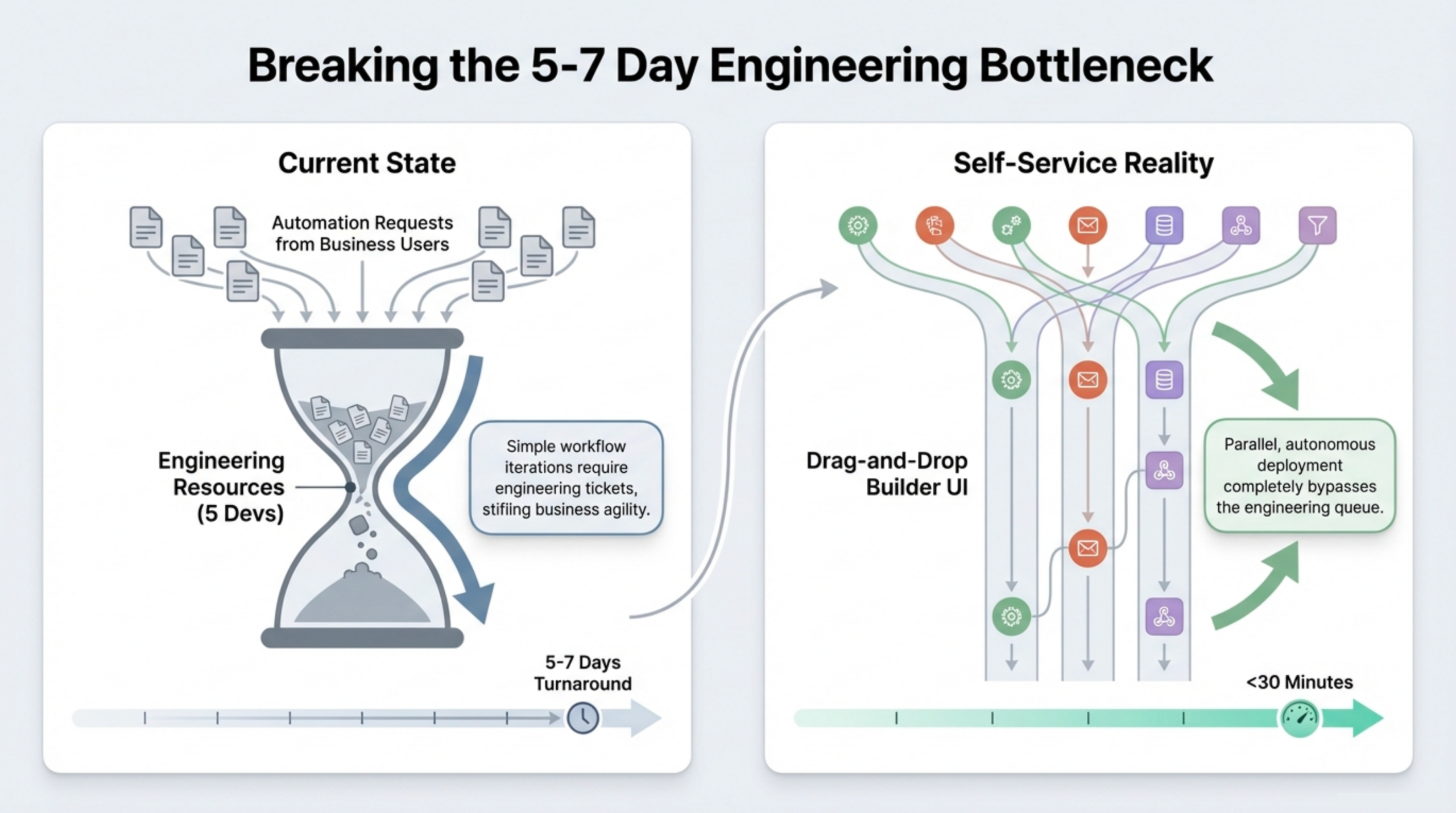
- 5–7 day setup cycles
- inability to iterate
- high engineering overhead
- loss of product agility
The deeper problem was the absence of a system layer that translated business logic into safe executable workflows. As a result, every change required manual interpretation instead of system-driven execution.
Constraints
The solution was defined under strict system and delivery constraints.
Architecture: The solution had to integrate into an existing live system without breaking backward compatibility.
Delivery: 6 months, 5 engineers, no additional resources.
Users: Non-technical admins working with real operational complexity.
Reliability: Enterprise-level requirements including permissions, auditability, and security.
Performance: Near real-time interaction inside the builder, not only in execution.
Key insight
Self-service without control is not a feature. It is a risk.
If users get direct access to workflow logic without system constraints, failure shifts from engineering to production.
The problem was reframed from enabling freedom to designing a controlled authoring system.
Solution
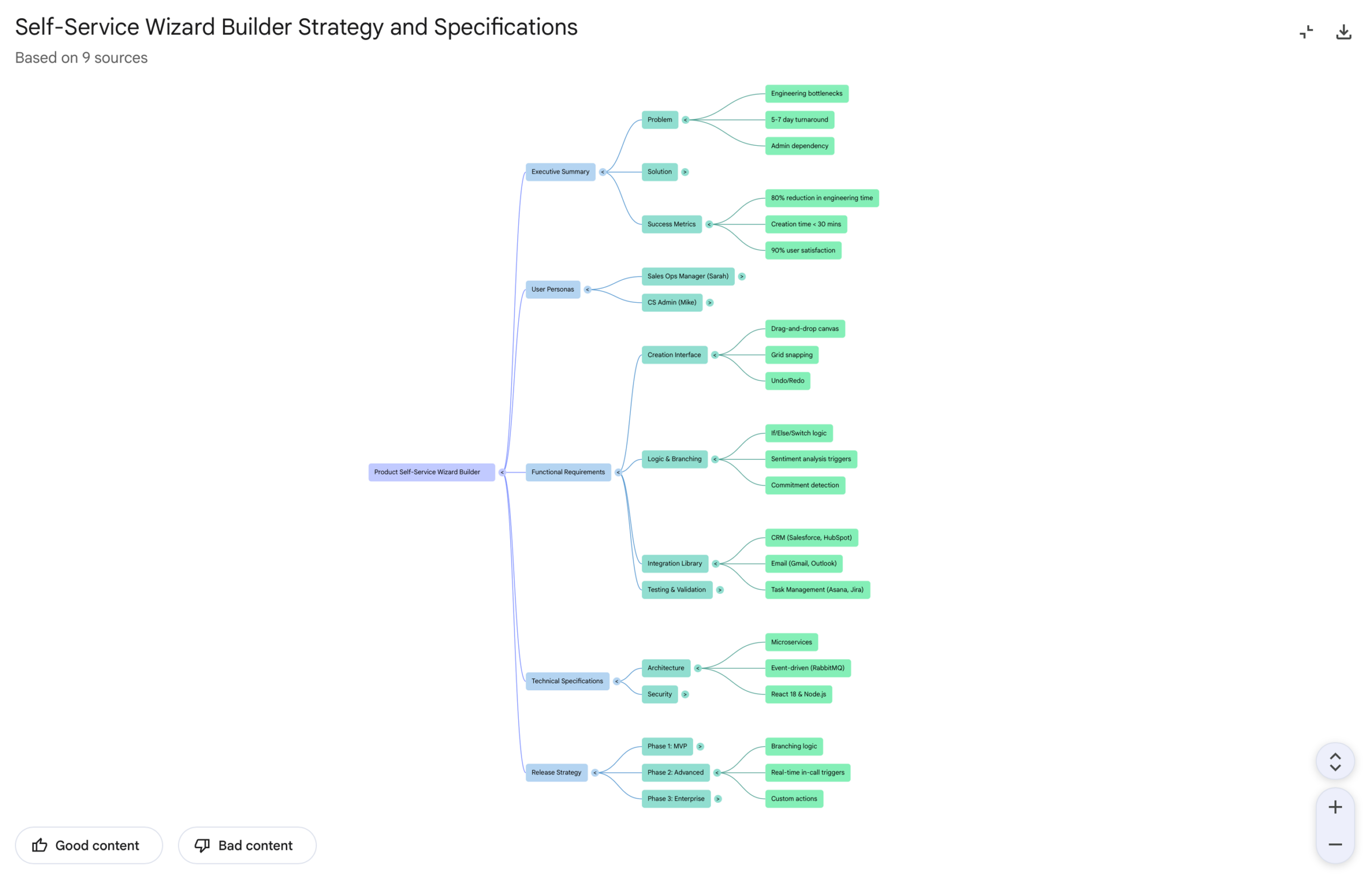
I defined the builder as a governed system for workflow authoring where flexibility is constrained by rules, states, and validation logic.
The system is not a set of features. It is a controlled environment where workflows can be created, verified, and executed without introducing instability.
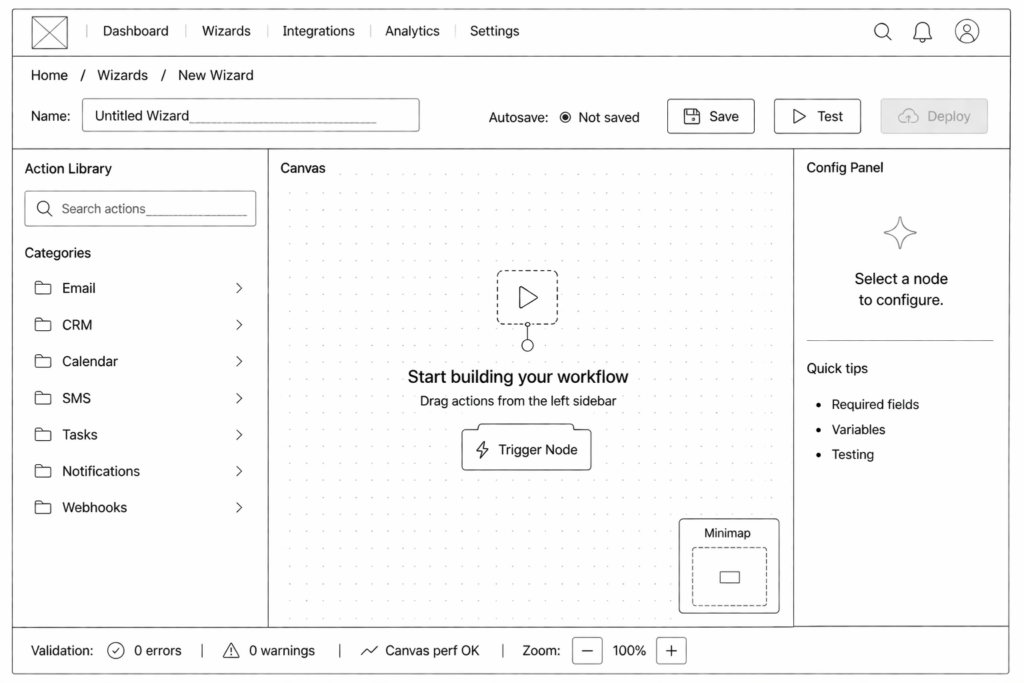
The builder starts as a controlled authoring environment, not an empty technical setup
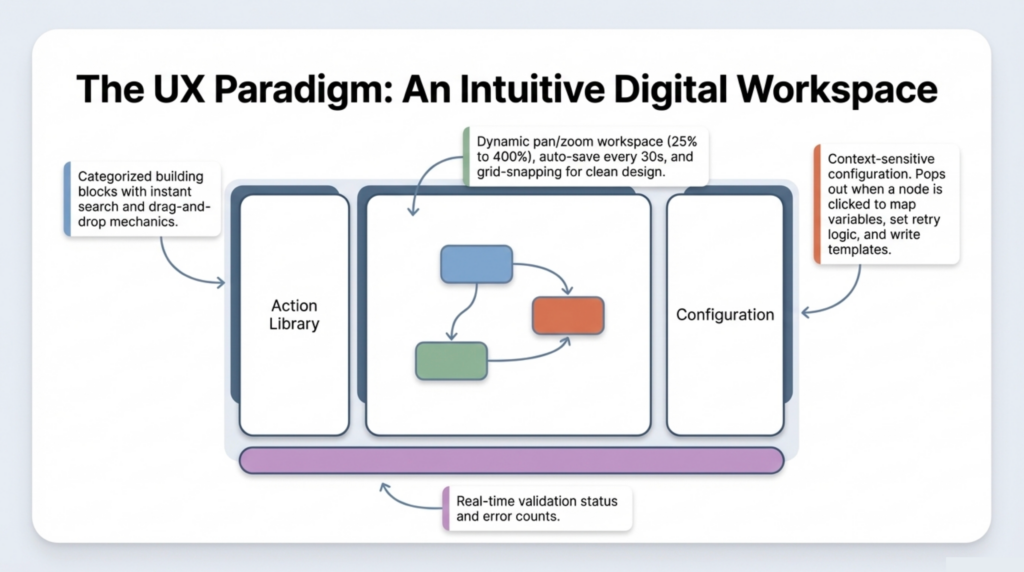
At its core, the builder operates as a continuous loop between composition, configuration, validation, and execution. Users construct workflows visually, configure actions contextually, and receive immediate system feedback before any execution is allowed. This shifts responsibility from user judgment to system enforcement.
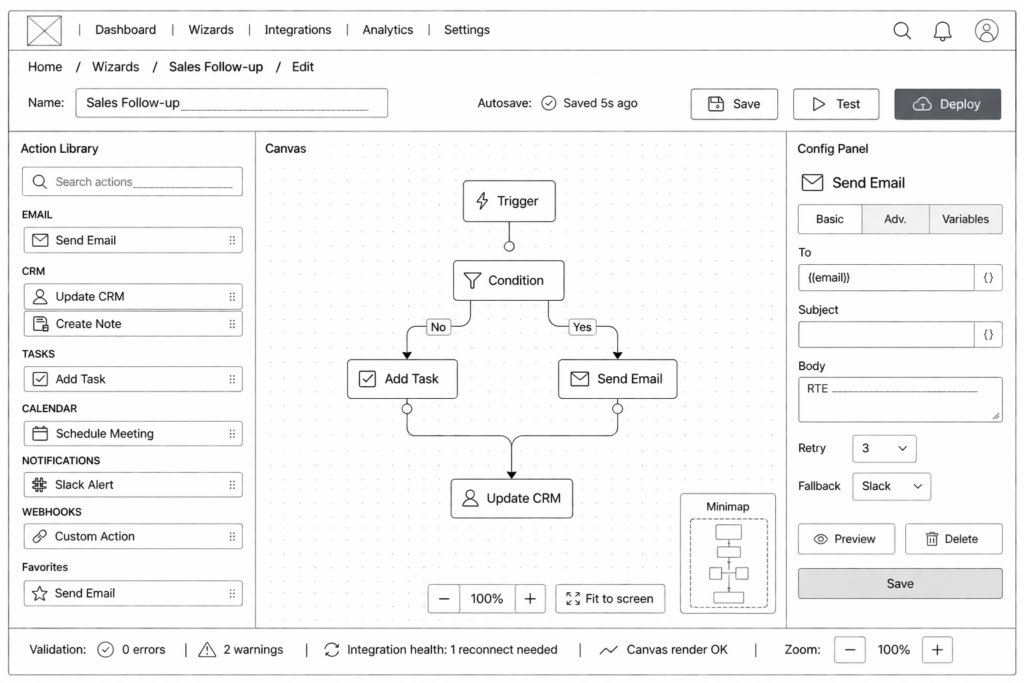
Workflow logic is composed visually, while configuration and system feedback remain connected to the same authoring surface
Workflow creation follows a strict state model: create, configure, validate, test, deploy, monitor. Each state introduces its own constraints and validation rules. Users cannot move forward until the system confirms correctness. Invalid workflows are not allowed to exist.
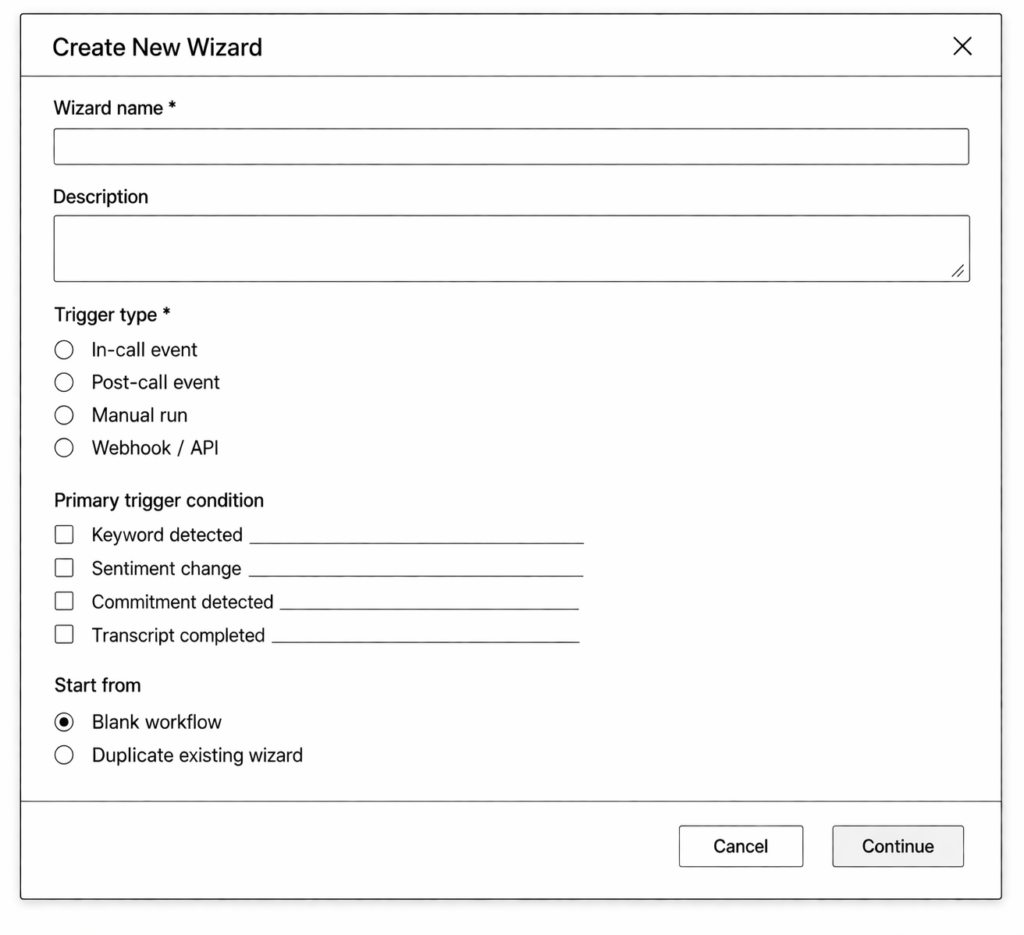
Workflow creation begins with structured inputs, ensuring that trigger logic and initial conditions are defined before authoring starts
Configuration is context-driven. Instead of exposing all parameters globally, the system reveals only what is relevant for the selected action. This reduces cognitive load while preserving the ability to define complex logic such as branching, conditions, and data-driven decisions.
Validation and test mode act as system gates. Before deployment, workflows go through structural validation, dependency checks, and execution simulation. This ensures that workflows are not only logically correct, but also safe to run in production.
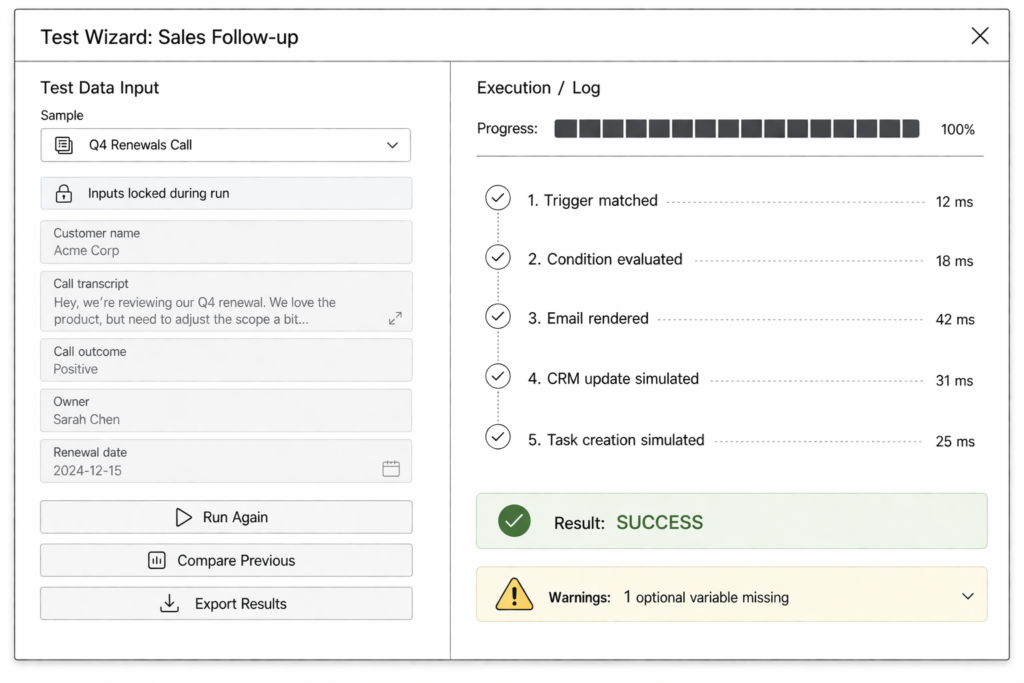
Test mode isolates execution, exposes step-by-step behavior, and verifies workflow logic before deployment
The system extends beyond creation into execution reliability. Retry logic, fallback actions, logging, and error handling ensure that workflows remain stable even under failure conditions.
Governance is embedded into the system through versioning, role-based access, and audit logs. This allows self-service to scale without losing control and turns workflow automation into a sustainable product capability.
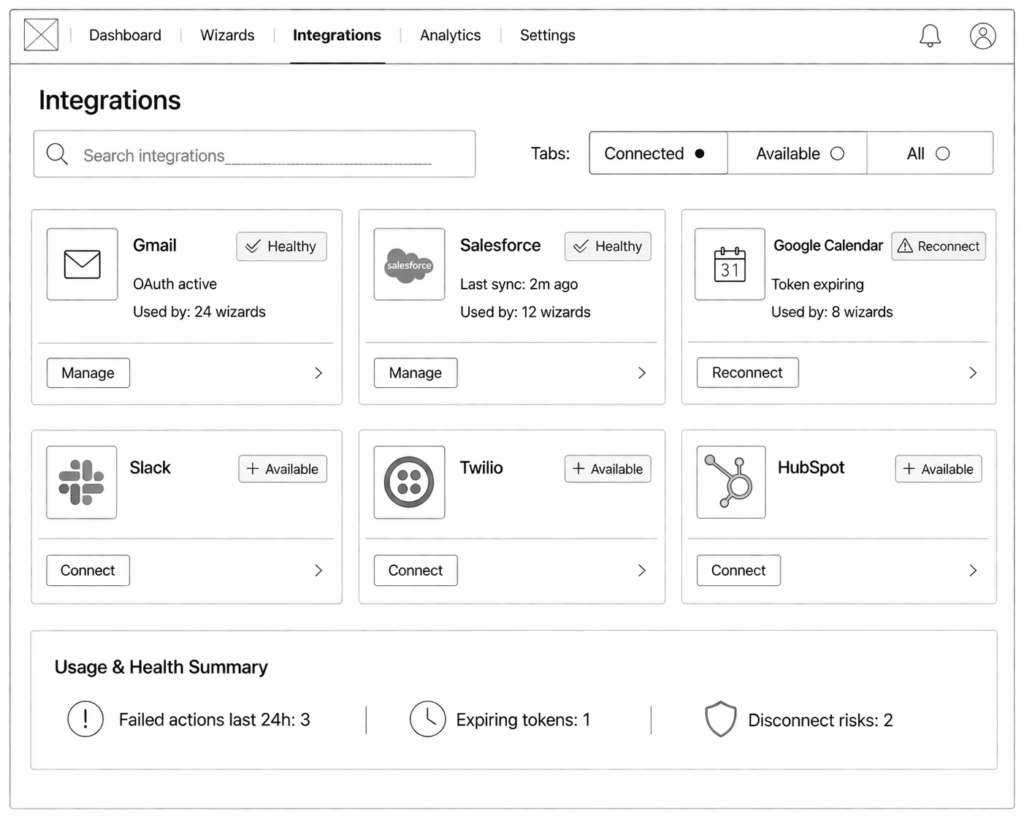
Connected systems, health states, and recovery actions are surfaced as part of governance, not left outside the workflow model
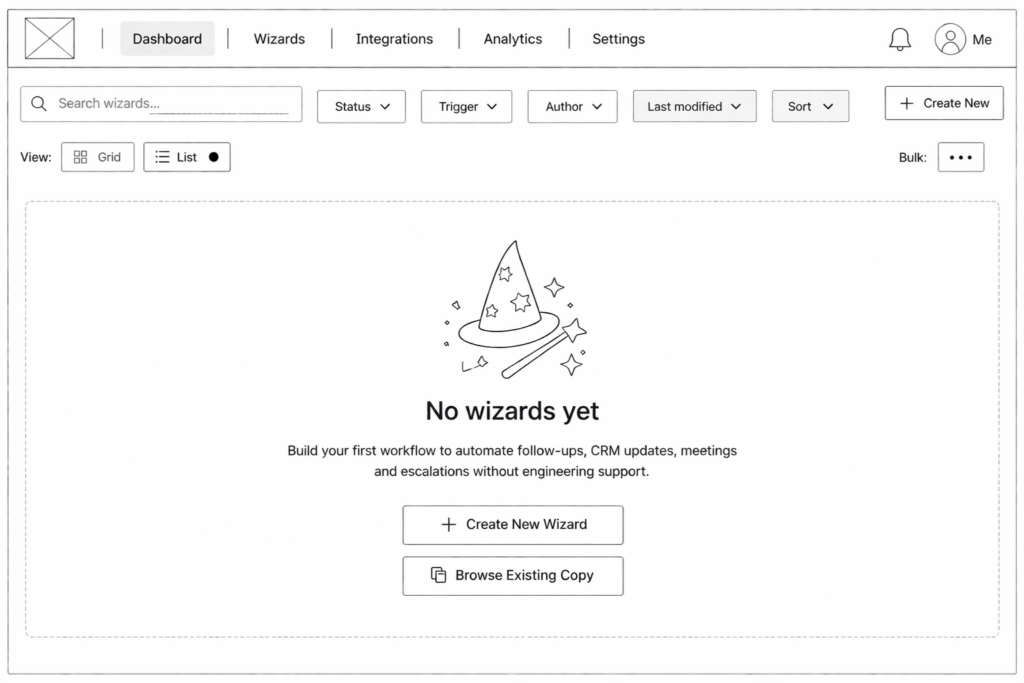
The system supports first-time adoption through guided entry, not just experienced usage
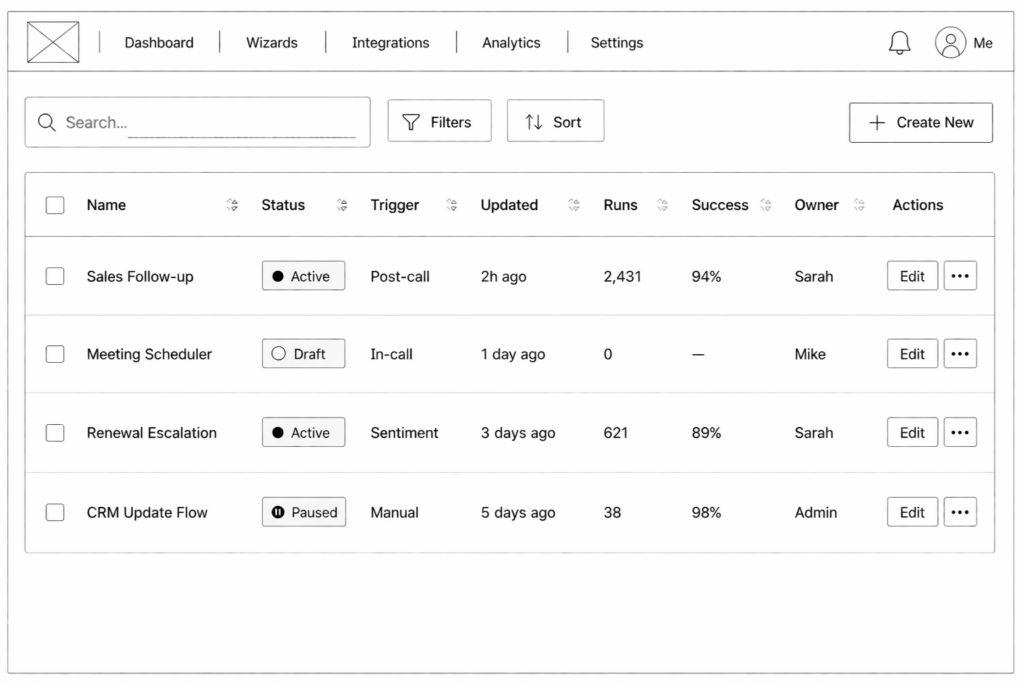
Workflows are managed as a reusable operational system rather than one-off automations
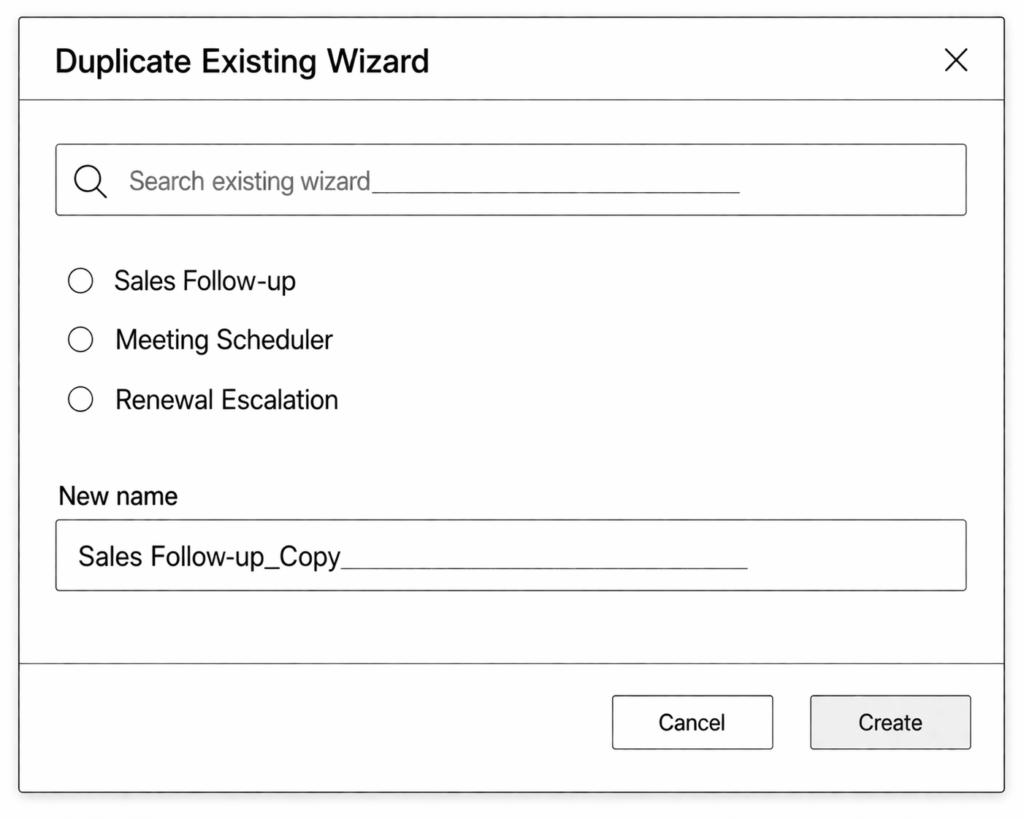
Reuse and duplication reduce setup cost and allow proven workflow patterns to scale across teams
Key decisions
Self-service vs safety: Controlled flexibility was prioritized over unrestricted freedom.
MVP vs completeness: Phased delivery was defined to protect core value.
- Phase 1 included linear workflows and limited actions
- Later phases introduced advanced logic and integrations
Speed vs governance: Additional system constraints such as roles, logs, and validation were introduced to ensure long-term scalability.
Implementation
I translated the system model into implementation-ready artifacts that made the solution executable across product, design, and engineering.
Personas were used to define complexity boundaries. Non-technical admins required a different authoring model than operational roles, which shaped how much control the system could expose without introducing risk.
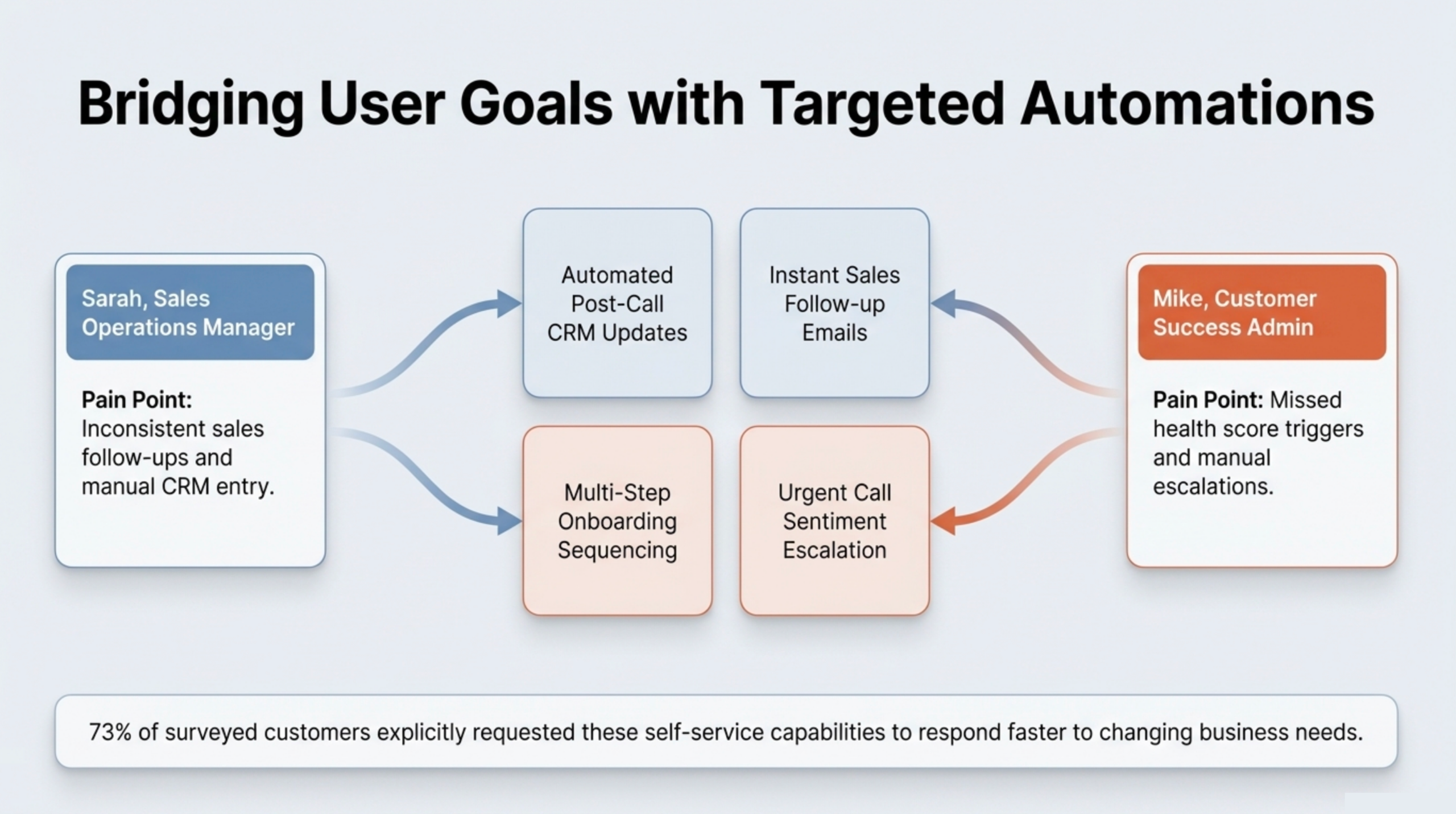
Use cases defined workflow depth and system scope. They determined which sequences, branching logic, and trigger combinations were required in the initial release and which could be deferred.
User stories and acceptance criteria formalized system behavior. They covered builder states, validation rules, execution logic, and governance constraints. Each rule was defined as testable rather than open to interpretation.
The system architecture was structured into three layers: builder, execution engine, and integrations. Clear boundaries between them enabled parallel development, reduced dependencies, and ensured scalability.
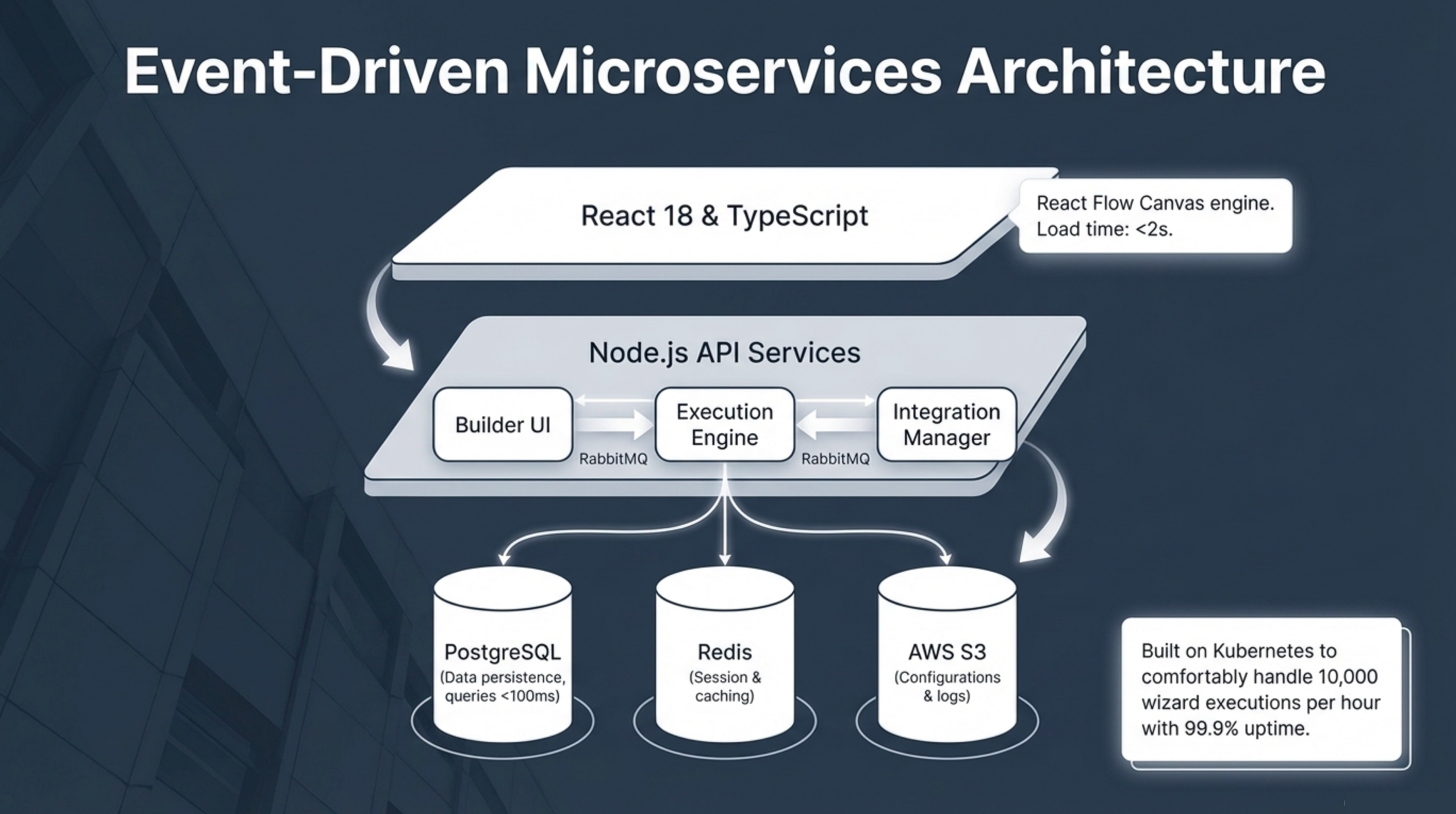
Documentation was maintained as a single source of truth across all phases, aligning product, engineering, and QA around the same system model.
Tools
The system was structured, validated, and prepared for implementation using tools aligned with different layers of product definition.
NotebookLM was used to structure source materials, decompose requirements into logical layers, and build a coherent system map.
Miro was used for system mapping, including workflows, state transitions, and relationships between triggers, actions, and conditions.
Cloud tools together with Figma were used to translate system logic into visual models and interactive workflows, including builder structure and state transitions.
ChatGPT was used to validate system logic, stress-test assumptions, and support documentation clarity.
Jira was used to decompose the system into implementation-ready user stories and acceptance criteria.
Confluence served as a single source of truth for documentation, capturing system behavior, scenarios, and constraints.
Impact
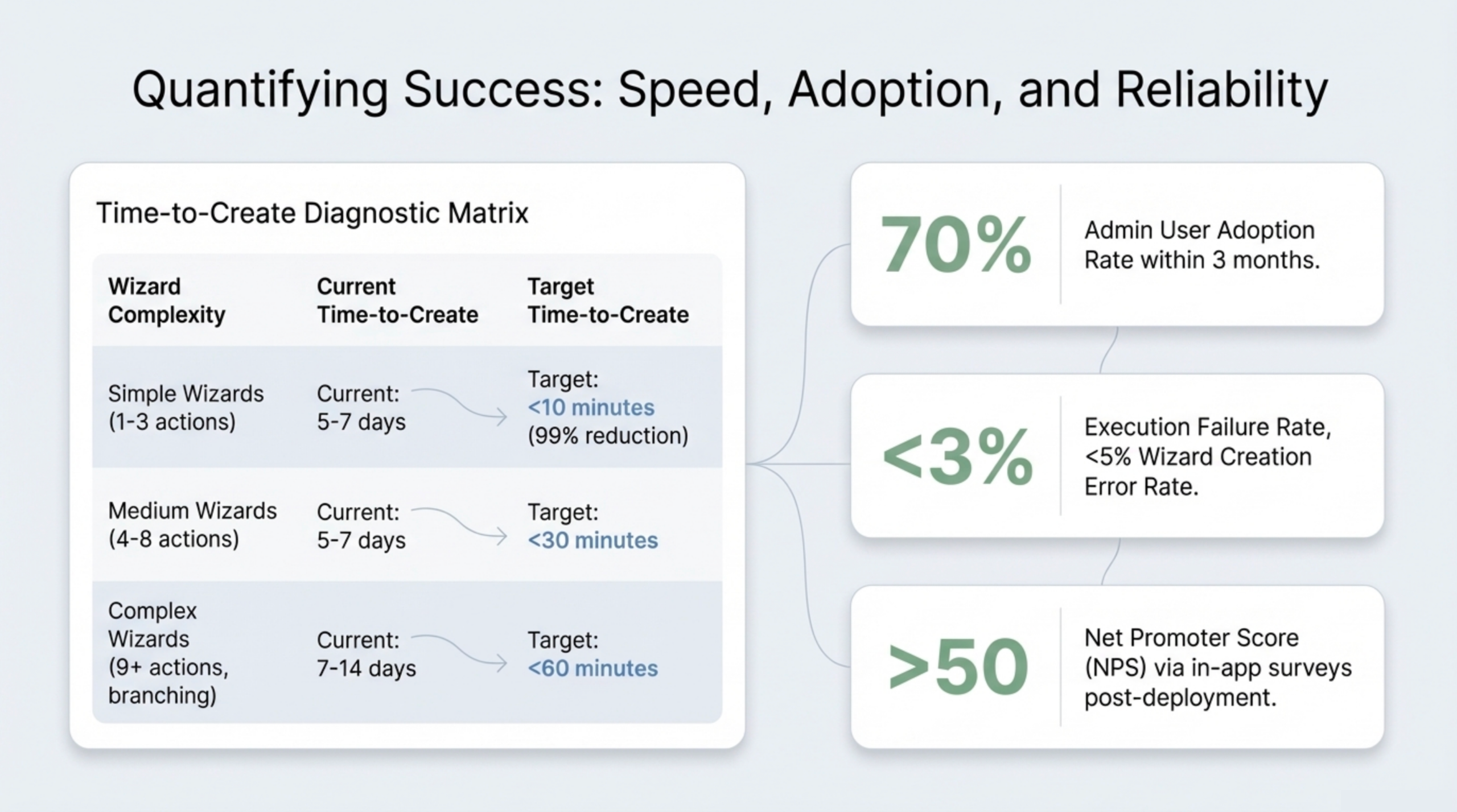
workflow creation reduced from 5–7 days to under 30 minutes
- engineering dependency reduced by 80%
- more than 200 hours per month saved
- 70% admin adoption within 3 months
- execution failure rate below 3%
These outcomes were enabled by system constraints rather than user discipline.